

How computer language flaws found using AI could impact 70% websites; CERT-In issues critical alert
Critical PHP security flaws affecting 70% of websites prompted government shutdowns across multiple countries; CERT-In issued an alert.
Stories tagged by our AI curator.
Critical PHP security flaws affecting 70% of websites prompted government shutdowns across multiple countries; CERT-In issued an alert.
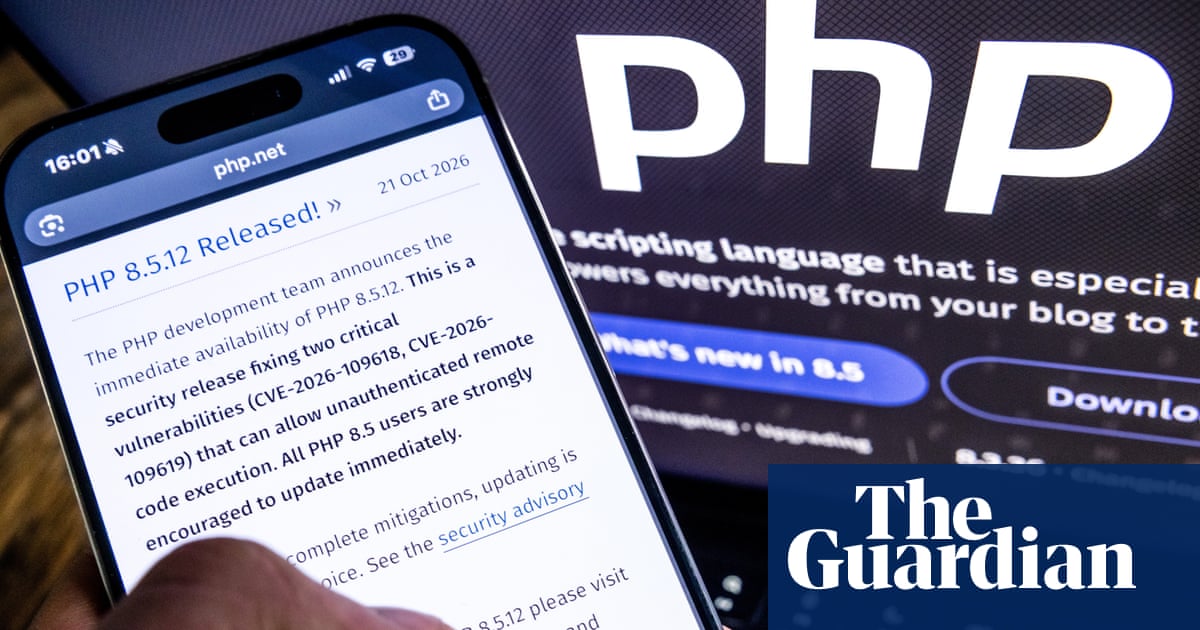
A critical vulnerability discovered in PHP, the language used by nearly 70% of websites, prompted governments in Belgium, Netherlands, Finland, France and Germany to temporarily take down websites for patching.
Multiple security vulnerabilities surfaced this week, including AI-discovered PHP flaws, Node.js issues, and problems in the LiteLLM AI tool, creating urgent concerns for cybersecurity teams.
Security teams must shift from fixing all vulnerabilities to prioritizing meaningful exposures based on realistic exploitability and business impact.
The cybersecurity landscape faces a 'Patch Apocalypse' as nearly 48,000 CVEs were published in 2025 with exploit windows collapsing to roughly five days, forcing enterprises to shift from reactive patching to risk-based automation.
CISA is warning that attackers are actively chaining four Plex Media Server vulnerabilities in 'Plex2Shell' attacks to breach servers.
Enterprise AI is shifting from advisory to autonomous agentic systems that execute multistep tasks independently, raising significant security and operational risks for IT teams.
OpenAI and Google researchers discovered critical security vulnerabilities in PHP infrastructure, highlighting the dual nature of AI in both preventing and introducing risks.
India's MeitY has ordered a probe into eMudhra's security breach involving eight compromised digital certificates, concluding impact on Indian websites and apps was limited and domestic digital signature services unaffected.
eMudhra co-founder stated that compromised digital certificate keys were never deployed commercially and had no impact on subscribers or other business lines.
PHP developers released patches for critical vulnerabilities; EU officials warned organizations to take vulnerable websites offline if patches cannot be applied immediately.
Website administrators worldwide are preparing for impact following disclosure of a major PHP flaw.
Critical PHP vulnerabilities affecting nearly 70% of websites are being actively exploited, allowing attackers full server control and causing widespread outages.
The PHP Foundation has disclosed two critical vulnerabilities that could affect millions of websites, with experts warning of severe consequences if not patched quickly.
India's government forms a team to investigate a security incident at eMudhra's certificate business, saying the impact on Indian websites and applications is limited.
Private keys for eight intermediate certificates from Indian digital trust provider eMudhra were compromised, prompting Chrome and Firefox to block the affected certificates to prevent website impersonation.
ClickFix malware attacks are escalating, with cybercriminals leveraging fake AI installers and trusted platforms to distribute malware.
AI-powered antidetect browsers are enabling scams, fraud, and influence operations while evading detection, creating new security challenges.