
Postal Service Surveilled Protest Activities Online With Little Rules, Oversight
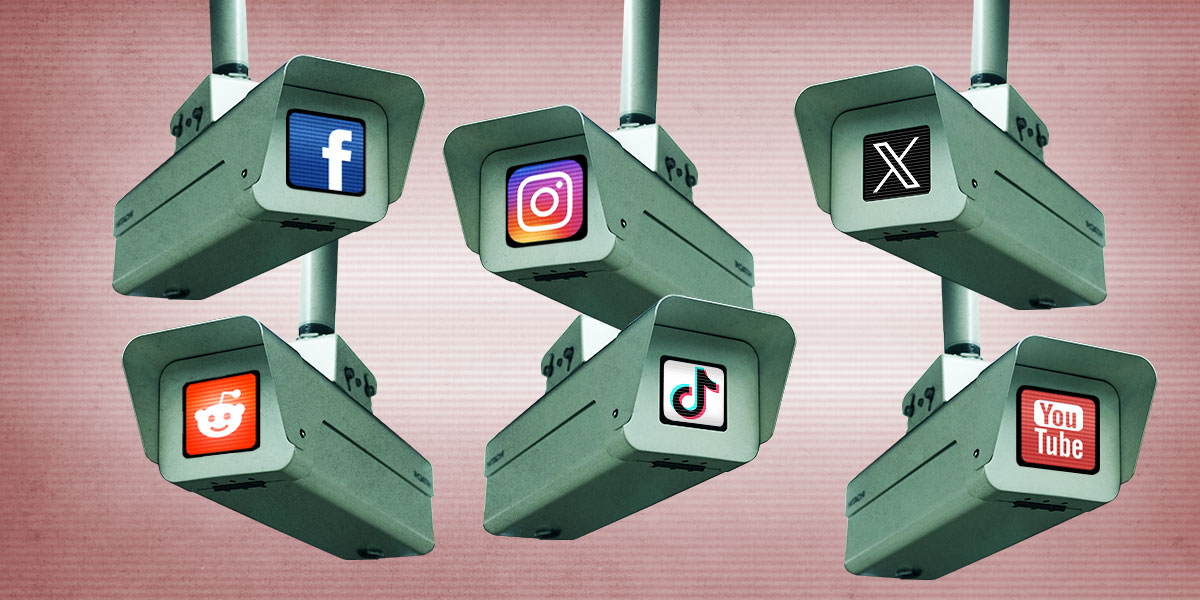
The U.S. Postal Service used social media surveillance to monitor and report on protests across the political spectrum, government records show.
The records, disclosed to EFF and other requesters suing the postal service under the Freedom of Information Act, show that the agency’s internet Covert Operations Program, or iCOP, routinely sifted through social media posts organizing and discussing protests with little records of any oversight or legal justification.
EFF filed suit in 2021 after Yahoo News disclosed the program’s existence and how the agency used it to monitor First Amendment protected activities. After years of delays and technical failures that led the agency to lose access to a trove of emails discussing the program, the postal service disclosed records to EFF and several other requesters this year.
The Postal Service used iCOP to surveil First Amendment activities
The disclosures include a series of bulletins created from iCOP, which show that the postal service used the program in 2020 and 2021 to monitor and circulate information about a wide range of planned protests. They included a planned “Million MAGA March,” a guns rights advocacy event and counter-protest in Virginia, a nationwide Save the Post Office Saturday protest, and planned protests in front of then-Postmaster General Louis DeJoy’s home in Washington, D.C.
Many of the bulletins provide dry descriptions of the events being planned and reference public discussions or events on major social media services. Others seem to imply or anticipate that the protests would turn violent.
For example, in discussing planned national and international protests scheduled for March 20, 2021, the bulletin references potential violence in light of “online inflammatory material.” Yet the bulletin acknowledges that the agency has “no intelligence to suggest specific threats.” This bulletin was described by Yahoo News when it disclosed iCOP’s existence.
Another bulletin discussing an ongoing Black Lives Matter protests in response to police shooting and killing people styles itself as a “National Civil Unrest Update.” The bulletins also recount and monitor threats sent to then-Postmaster DeJoy.
The Postal Service also disclosed three email chains to EFF that, while heavily redacted, show how the agency queried iCOP and disseminated what it found (Read the emails here, here, and here). The government agreed to release the email messages as part of settling EFF’s FOIA suit this fall. To EFF’s knowledge, they are the only existing materials that reflect how the agency queried iCOP.
Postal Service renames iCOP and loses access to records about it
According to the agency, after Yahoo News disclosed the program in 2021, the postal service renamed it and publicly said that it had stopped issuing bulletins. But the documents do not say that the agency’s social media surveillance stopped.
At the same time, EFF and several other FOIA requesters sought records detailing how the agency used iCOP and what rules the postal service had for using the program and distributing information it gained from surveilling social media. EFF spent years pushing the agency to disclose email communications about the program, which the agency had stored on an external hard drive. Amid these negotiations, someone dropped the hard drive, rendering it inoperable, agency officials said. By the time that happened, the agency had already deleted the underlying email messages pursuant to the agency’s retention schedule.
Minimal records disclosed about internal limits on surveillance programs
EFF’s FOIA request sought internal rules, guidance, and training that would show what safeguard the Postal Service imposed to protect First Amendment rights. The agency disclosed very few documents in response to this part of EFF’s request.
For example, a series of slides give an overview of the program, but do not explain how officials used iCOP. The closest thing to internal guideline that the agency disclosed were talking points the Chief Postal Inspector authored in response to questions about iCOP.
The inspector wrote that “In reviewing social media postings to gather information we did not single out any particular group and did not base what was reviewed on race, religion, gender, sexual orientation, immigration status, or a person’s exercise of First Amendment freedoms.” The statement echoes language in the a bulletin stating that its purpose is not to infringe on First Amendment rights. And other parts of the talking points characterize the surveillance as providing officials with situational awareness.
The postal inspector’s talking points go on to say that “the recent attention on iCOP has highlighted opportunities for improvement, including enhanced executive oversight. We have stopped the distribution of the bulletins like the one you have seen in the media reports.”
Setting aside that it’s unclear whether internal oversight occurred or resulted in any changes, the claim that iCOP did not infringe on First Amendment rights rings hollow. As the records disclosed show, surveilling and reporting on social media users’ efforts to organize rallies and protests was a feature of iCOP.
But more fundamentally, the claims by Postal Service officials fail to recognize that surveillance directly chills First Amendment rights. Further, the government can misuse the information it obtained as part of its social media surveillance to harass or retaliate against those exercising their constitutional rights.
Although EFF’s case seeking records about iCOP has ended, we will continue to bring more transparency to the government’s use of social media surveillance and look for ways to challenge the practice, especially when people are caught in the dragnet for exercising the First Amendment rights.
Related Cases: EFF v. USPS - Social media monitoring (iCOP)